جزئیات
بارگذاری
ذخیره دادههای پایگاه شرق مکنون
با انتخاب یکی از گزینههای زیر، ذخیرهسازی متن تمامی نتایج جستجویتان در پایگاه دادههای شرق مکنون شروع میشود.
برای شروع ذخیرهسازی، یکی را از گزینههای زیر را انتخاب کنید.
توجه: ممکن است فرایند ذخیرهسازی دقایقی طول بکشد. لطفاً صبر کنید.
- Microsoft Word (.docx)
- JSON
- XML
Download started
محتوا
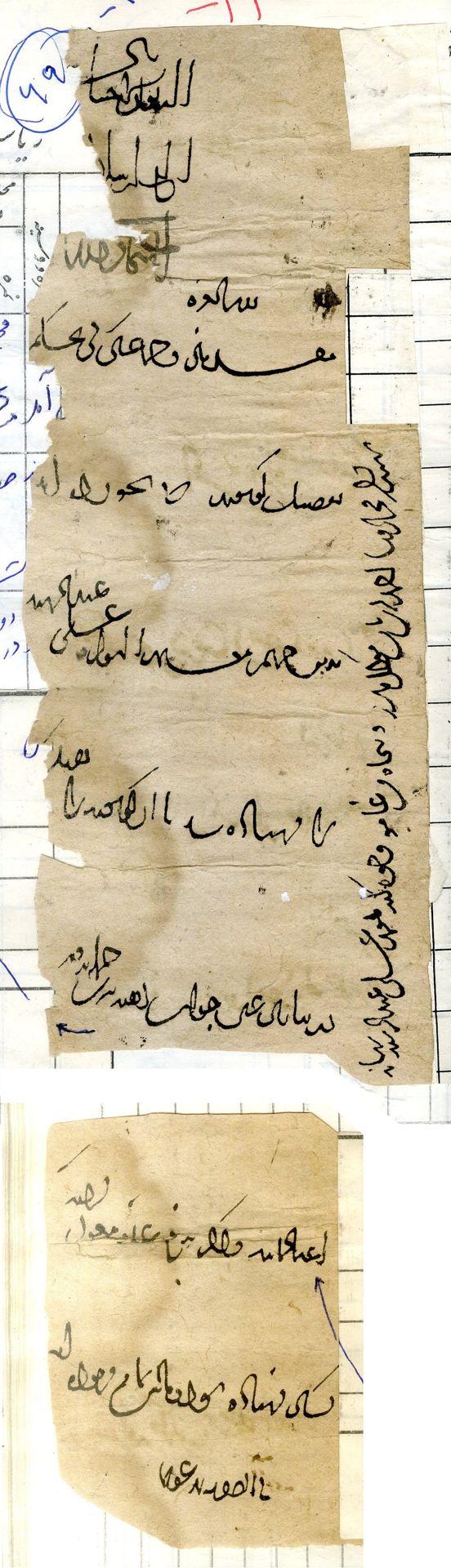
An order sent from al-Dīwān al-Ikhtiyārī to the muqaddams and the people (jamāʿat) that appear in a certain list (tafṣīl), concerning the compensation for the sheep eaten by the villagers. The dīwān has sent Muʿtamid al-Dawla ʿAlī b. ʿAbd al-Rashīd to oversee the procedure.
تاریخ
- The Gregorian calendar: May-June 1217(?) (1217-05-17 - 1217-06-14)
- The Hijri calendar: Ṣafar 614(?) (0614-02)
جزئیات
Firuzkuh 47
Silver (given following internal peer review)
توصیفات فیزیکی
Complete (document cut into two parts to fit into Mirza Khwaja Muhammad’s notebook), 9 fold lines, black ink, pasted into Mirza Khwaja Muhammad’s notebook.
9
اشخاص
نشریات مرتبط
- Khwaja Muhammad and Nabi Saqee, Barg-hāy az yak faṣl, yā asnād-i tārīkhī-yi Ghur (Kabul: Saʿīd 1388/2009) (Pages: 86-87)
The IEDC transcription has been revised from this publication.
شماره قفسههای مرتبط
دادههای پایگاه دیجیتال شرق مکنون
136
21/05/2024
24/05/2026
ارجاعات
Ofir Haim
Arezou Azad, Nabi Saqee
The transcription has been revised from a previous publication (see Publications), the translation is the original work of the IEDC Team (as yet unpublished in peer-review print)
Images of this Text displayed on this web page are provided by Nabi Saqee.
© Nabi Saqee, All rights reserved.
If you wish to reproduce these images please contact Nabi Saqee.
© Nabi Saqee, All rights reserved.
If you wish to reproduce these images please contact Nabi Saqee.
تماس
invisible_east@conted.ox.ac.uk (Please include the above permalink when contacting the editorial team about this Text)