Afghanistan National Archives: Firuzkuh 81
  • Details
  • Folios
  • Tags
  • Transcriptions
  • Translations
  • Palaeography
Details
Download

Download IEDC Data

You are about to download data for the current text from the IEDC database.

To start the download, please click on your desired format below.

Note: it can take up to several minutes to download your data, so please wait whilst it processes

Download started

Content

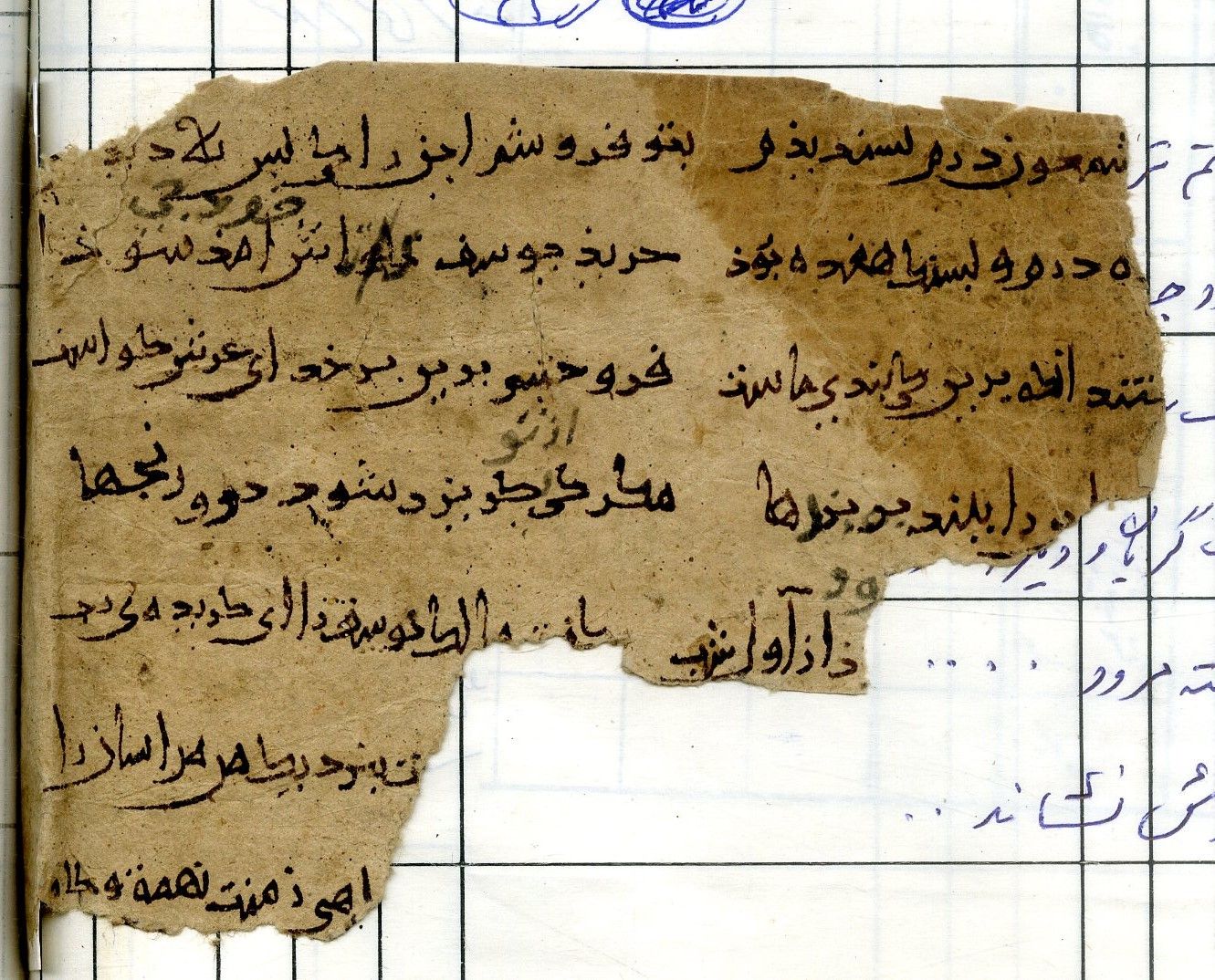
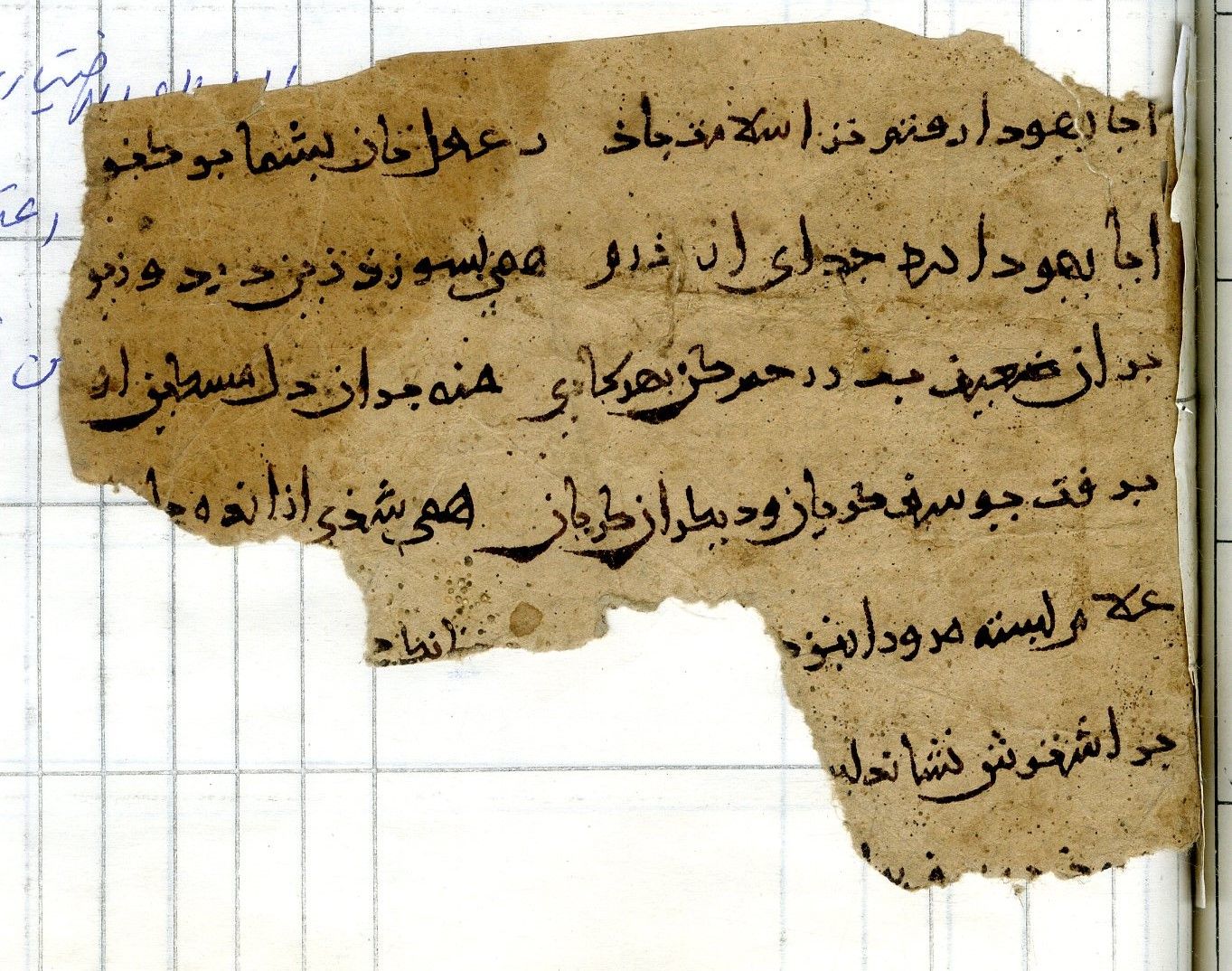
This is a rhyming poem about the story of Joseph (Yūsuf) known from the Qurʾān (sūra XII) when he was sold into slavery as a boy by his brothers. The poem includes direct speech in Yūsuf’s voice. The handwriting is stylised as in 11th-century documents ( e.g. with dotting on the dāl and lettering). A second hand has made annotations.

Dates

(Dates unknown)

Details

Firuzkuh 81
Silver (given following internal peer review)
New Persian (Arabic script)

Physical Description

paper
Incomplete (missing right and bottom parts), black ink; verso used, pasted onto Mirza Khwaja Muhammad's notebook with his handwriting in ballpoint pen
2 horizontal + 1 vertical fold lines

People

Publications

  • Khwaja Muhammad and Nabi Saqee, Barg-hāy az yak faṣl, yā asnād-i tārīkhī-yi Ghur (Kabul: Saʿīd 1388/2009) (Pages: 128-29)
  • https://invisibleeast.web.ox.ac.uk/article/document-month-925-oldest-fragment-joseph-and-zulaykha-persian

Related Shelfmarks

IEDC Data

1232
14/04/2025
26/05/2026

Citations

Nabi Saqee
Arezou Azad, Mateen Arghandehpour
The transcription and translation have been revised from a previous publication (see Publications)
See 'How to Cite'
Images of this Text displayed on this web page are provided by Nabi Saqee.
© Nabi Saqee, All rights reserved.
If you wish to reproduce these images please contact Nabi Saqee.

Contact

invisible_east@conted.ox.ac.uk (Please include the above permalink when contacting the editorial team about this Text)
Folios
1. recto
2. verso
Tags
Folio:
Transcription
Folio:
[-/+ 3] شمعون درم پسندیذم        بتو فروشم این را کی بس بلا دید[م] 1
[-/+ 3] ه درم و بسنگ هفده بُوذ         خریذ یوسف تاش آمذ سوذ 2
[-/+ 3 فروخـ؟]ـتند آنگه برین کی بندي ماست        فروختیم برین بر خدای عرش گواست 3
[-/+ 4 ]این را ببند بربندها        مگر کی گریزد شود درو رنجها 4
[-/+ 5 ] داد آول شب        یافت مالک یوسف را ای گزیده ی رب 5
[ -/+ 7]         [-/+ 3]ت بنزدیک من مرایشان را 6
[ -/+ 7]         [-/+ 4]  اهی ز منت نهفته و گاه (؟) 7
ایا یهودا رفتم ترا سلامت باذ        ز عقل تان بشما بر(؟) کفو(؟) [-/+ 2]  1
ایا یهودا درد جدایی آزردم        همی بسوزذ زین درد و زبر[-/+ 1] 2
بران ضعیف پذر(؟) رحم کن بهرکاری        منه بران دل مسکین او (؟) [ +1] [آزاری] 3
برفت یوسف گریان و دیگران گریان        همی شذی از انده [-/+ 4] 4
غلام بسته مرورا بنزد [-/+2]        چنانک [-/+ 5] 5
بر اشترش نشاند [-/+ 3]        [-/+ 6] 6
[-/+ 6]        [-/+ 6] 7
Translation
Folio:
1 [+/-3] Simon, I accepted the dirhams        I sell him to you, for I have only had trouble with him
2 [+/-3] dirhams which weighed 17 stones        bought Joseph so that he may make a profit
3 [+/-3 sold him?] then, “because he is our prisoner.        We sold him thus, God of the throne is our witness
4 [+/-3] tie him up in bonds        lest he escapes, and causes distress”
5 [+/-5] gave him (?) in the early night        Mālik encountered Joseph, “O Lord’s chosen one,
6 [+/-7]        [+/-2 bring?] him close to me, 
7 [+/-7]        [+/-4] hidden from me at times (?)
1 “O Judas, I am gone, farewell!        Your conscience [shall reprimand?] you [+/-2]
2 O Judas, I suffered the pain of separation        [my body?] is burning from this pain [+/-4]
3 Upon [my] weak father, always have mercy        Do not lodge [+1] [grief] in his wretched heart”
4 Joseph left in tears and the others cried        He walked away, in despair [+/-4]
5 The guard bound him, and [took] him to [+/-2]        Such that [+/-5]
6 He seated him on a camel [+/-3]        [+/-6]
7 [+/-6]        [+/-6]
Palaeography

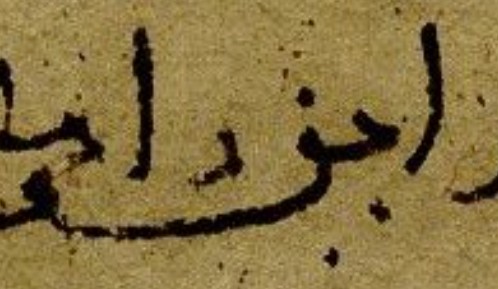
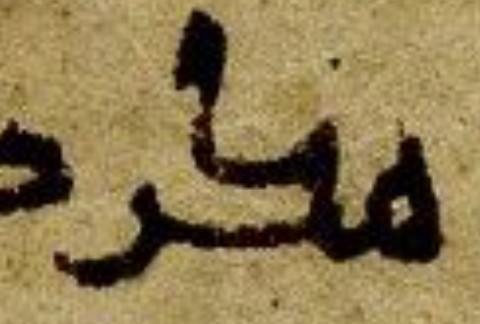
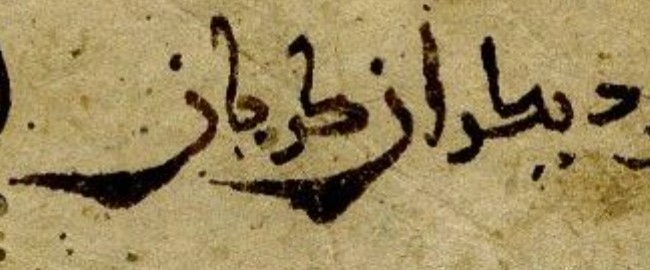
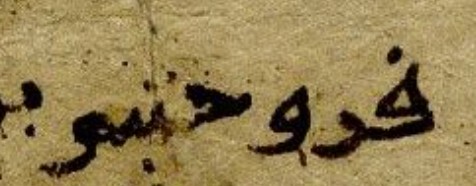
This fragment is written in the angular script of a bookhand typical of the tenth century. The baseline is straight. The heads of looped letters such as fāʾ, mīm, and wāw are pointed, while the bowls of descending letters such as yāʾ and nūn are flattened and open. The letter kāf is written in its archaic form with distinct orthogonality, formed of a vertical stroke which transitions into the baseline through a series of three perfect right angles. On the verso, the tails of nūn have been accentuated with a thicker qalam, giving them a distinctive triangular form.


Further Reading


Glossary


Angular — a script style in which letterforms are constructed using straight strokes meeting at sharp angles, without curves; characteristic of early Arabic bookhands and ‘New Style’ Qur’anic scripts

Baseline — the line on which letters sit

Bookhand — a script style associated with the copying of manuscripts, typically more formal and regular than documentary hands

Bowl — the rounded closed or semi-closed curve of a letter which descends below the baseline, as in wāw, qāf, nūn, and sīn

Descender — the portion of a letter that extends below the baseline, as in rāʾ, zāyy, and lām

Orthogonal — composed of right angles; used to describe scripts in which strokes meet at ninety degrees, producing a rigid, angular aspect

Qalam — Arabic term derived from the Greek kalamos; the reed pen used for writing

This fragment is written in the angular script of a bookhand typical of the tenth century. The baseline is straight. The heads of looped letters such as fāʾ, mīm, and wāw are pointed, while the bowls of descending letters such as yāʾ and nūn are flattened and open. The letter kāf is written in its archaic form with distinct orthogonality, formed of a vertical stroke which transitions into the baseline through a series of three perfect right angles. On the verso, the tails of nūn have been accentuated with a thicker qalam, giving them a distinctive triangular form.


Further Reading


Glossary


Angular — a script style in which letterforms are constructed using straight strokes meeting at sharp angles, without curves; characteristic of early Arabic bookhands and ‘New Style’ Qur’anic scripts

Baseline — the line on which letters sit

Bookhand — a script style associated with the copying of manuscripts, typically more formal and regular than documentary hands

Bowl — the rounded closed or semi-closed curve of a letter which descends below the baseline, as in wāw, qāf, nūn, and sīn

Descender — the portion of a letter that extends below the baseline, as in rāʾ, zāyy, and lām

Orthogonal — composed of right angles; used to describe scripts in which strokes meet at ninety degrees, producing a rigid, angular aspect

Qalam — Arabic term derived from the Greek kalamos; the reed pen used for writing

Afghanistan National Archives: Firuzkuh 81: Folio (recto)
Afghanistan National Archives: Firuzkuh 81: Folio (verso)
Images courtesy of Nabi Saqee