Khalili Collection: DOC 47 [AR 21]
  • Details
  • Tags
  • Transcriptions
  • Translations
  • Palaeography
  • Seals
Details
Download

Download IEDC Data

You are about to download data for the current text from the IEDC database.

To start the download, please click on your desired format below.

Note: it can take up to several minutes to download your data, so please wait whilst it processes

Download started

Content

Manumission of a slave.

Dates

  • The Gregorian calendar: June-July 765 (0765-06-25 - 0765-07-24)
  • The Hijri calendar: Jumada I 148 (0148-05)

Details

DOC 47 [AR 21]
Khalili Collection
Gold (given following external peer review through journal/book publication)
Arabic (Arabic script)
Legal

Physical Description

parchment
Written on light parchment.
34.0
10.0

Publications

  • Khan, Geoffrey. 2007. Arabic documents from early Islamic Khurasan (Studies in the Khalili Collection Volume V). London: The Nour Foundation in association with Azimuth Editions. (Pages: 162-165)
    Catalogue Number: 32
    The IEDC translation and transcription have been taken from this publication

Related Shelfmarks

IEDC Data

35
02/12/2023
09/08/2026

Citations

Geoffrey Khan
Thomas Benfey
The transcription and translation have been taken from a previous publication (see Publications)
See 'How to Cite'
Images of this Text displayed on this web page are provided by Khalili Collection.
© Khalili Collection, All rights reserved.
If you wish to reproduce these images please contact Khalili Collection.

Contact

invisible_east@conted.ox.ac.uk (Please include the above permalink when contacting the editorial team about this Text)
Folios
1. recto
Tags
Folio:
Transcription
Folio:
بسم الله الرحمن الرحيم 1
هذا ما كاتب بويه بن محمد كاتب 2
غلامه يسما قيى الحائك على 3
مية درهم وستة عشر درهما 4
وقد قبض المية درهم وستة 5
اعشر درهما بيض نقد الناس 6
وبرئ قيى الحائك عن 7
مكاتبته كلها الى بويه 8
بن محمد شهد ادم بن عبد الله 9
يحيى بن حبة وعبد الملك 10
وجعفر بن حمران ومخلد مولى 11
زرعة وحسان مولى عبد الرحمان 12
وجهم بن قيس وعمر بياع 13
الكراس والرتبيل بن ورازان 14
ويمشلاد وعنبر بن قبجمون 15
وكر بن جوك وشميك 16
اخونج وخدو الحداد وبغدى 17
بن ميم وسليمن بن سرخس وباي 18
بن داد فرمان وطرخان بن خديوج 19
وكتت بن ويبود وكانه بن 20
زنداد وكتب لغرة 21
جمادى الاول سنة ثمان واربعين و 22
ومية وختم بويه بن محمد والشهود 23
Translation
Folio:
1 In the name of God, the Merciful and Compassionate.
2 This is what Būya b. Muḥammad contracted. He contracted
3 his servant, who is called Qiyā the weaver, for
4 one hundred and sixteen dirhams
5 and he has received the hundred and
6 sixteen dirhams, white, the currency of the people.
7 So Qiyā the weaver has been released
8 from (the obligation of) his contract in its entirety (to pay this) to Būya
9 b. Muḥammad. It has been witnessed by Adam b. ʿAbdallāh,
10 Yaḥyā b. Ḥabba, ʿAbd al-Malik,
11 Jaʿfar b. Ḥimrān, Mukhallad the client
12 of Zurʿa, Ḥassān the client of ʿAbd al-Raḥmān
13 Jahm b. Qays, ʿUmar the seller
14 of quires, al-Rutbīl b. Warāzān,
15 Yamshlād, ʿAnbar b. Qbjmwn (?),
16 Gar b. Jōk, Shamīk
17 Akhūnaj (?), Khodo the blacksmith, Baghdādī
18 b. Meyam, Sulaymān b. Sarakhs, Bāy
19 b. Dād-framān, Arkhān b. Khudēwag,
20 Ktt (?) b. Weybōr, Kānah b.
21 Zundād. It has been written at the beginning
22 of Jumādā I of the year one hundred and forty-eight.
23 Būyha b. Muḥammad and the witnesses have set their seal.
Palaeography

This document features a chancery script. The script is highly cursive. Letters are highly compressed and often written with a notable diagonal slant which contradicts the baseline, which is perfectly flat and straight.

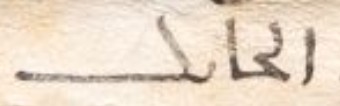
Words are crowded across the line, occasionally alleviated using madd (letter lengthening).
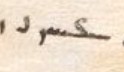
e.g. al-ḥāʾik line 7


The curves of letters such as rāʾ, nūn, and lām have been flattened.
e.g. ʿashar line 4


Some of these features, particularly flattened curves and diagonal strokes, are also found in contemporary Pahlavi documents. It is possible that bilingual Arabic-Pahlavi administrators imported elements of the ductus of Pahlavi script into their Arabic writing.


Glossary


Baseline — the line on which letters sit

Cursive — in Arabic palaeography, a technical term describing scripts characterized by obtuse angles, open curves, and diagonal strokes

Descender — the portion of a letter that extends below the baseline, as in rāʾ, zāyy, and lām

Ductus — the movement and sequence of strokes made by the scribe in forming letters

Madd — horizontal extension of letter strokes, used to fill space or as a decorative and calligraphic feature; also referred to as mashq in some traditions


Further Reading


Rustow, Marina. 2020. The Lost Archive: Traces of a Caliphate in a Cairo Synagogue. Princeton: Princeton University Press, 161-166.


Seals
Seal 1
Photograph of this seal
Inscription

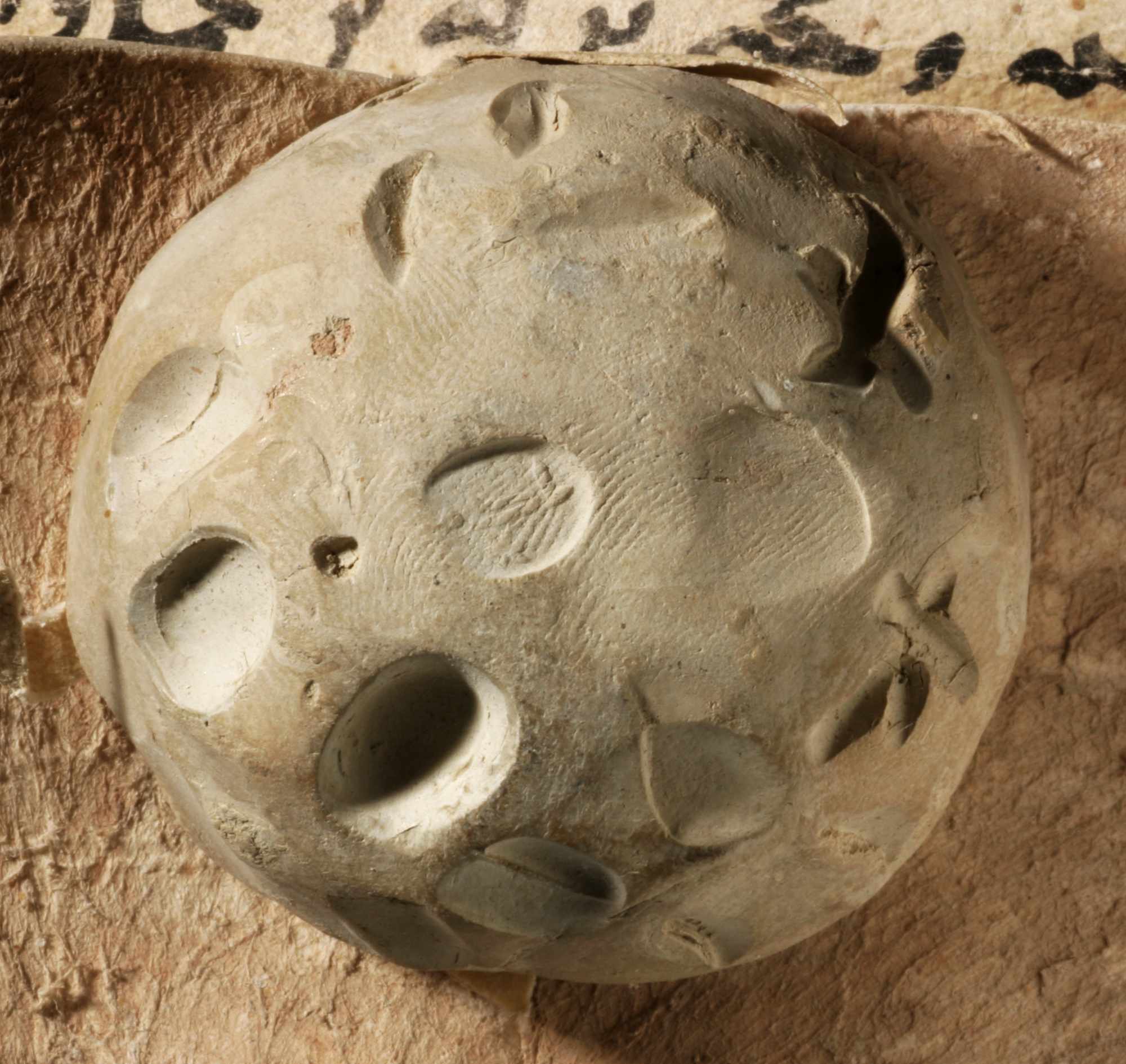
The bulla contains a number of blank impressions, thumbnails, and a seal with an inscription which may read "Mukhallad (?) Ma...(?)" which may correspond to the witness "Mukhallad Mawlā".

مخلد (؟)م

  • inscription
  • brown
  • inscriptions
Khalili Collection: DOC 47 [AR 21]: Folio (recto)
Images courtesy of Khalili Collection